
OUR FACTORY
A Manufacturing Base Built for Consistent Production
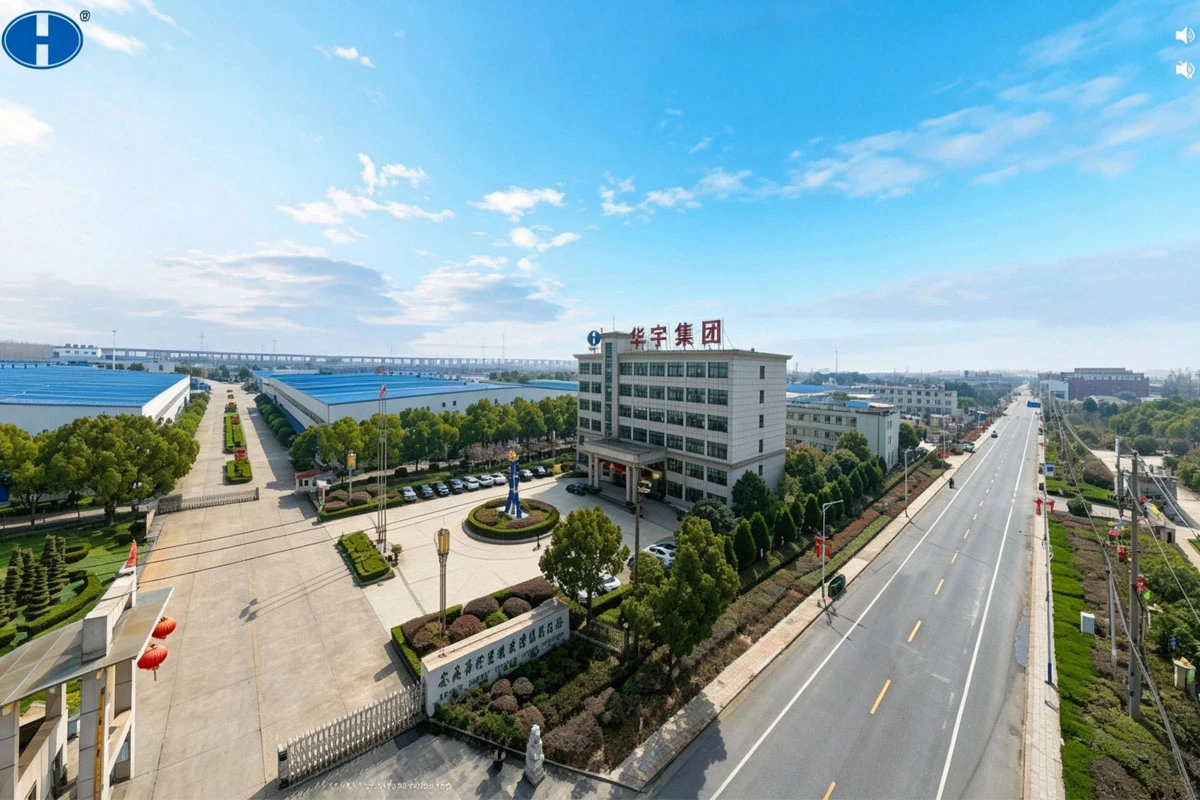
Huayu Cable's manufacturing base sits in Wuwei, Anhui Province - one of the country's established cable-industry hubs, and honestly, that's exactly why we locate here. The site runs over 258,000 square meters, split across raw material storage, several production workshops, finished-goods warehousing, and an R&D center. Materials move through these areas in a set order, following whatever process a given product calls for. Sounds simple enough, but that sequencing is a big part of why our lead times and product consistency stay predictable.

Cable manufacturing is a long chain - conductor processing, stranding, insulation, cabling, shielding, armoring, sheathing - and a slip at any one step can show up in the finished product. That's why we set up our workshops around these processes instead of one fixed line, so we can run several product types at once instead of planning things every time a new order comes in. What matters for a given cable changes a lot job to job - rated voltage, installation method, mechanical stress, temperature range, flame-retardant performance, whatever standard applies. Basically, how fast a line can switch between these is often the whole difference between taking a specialized order and having to say no to it.
We've also got three R&D platforms on site - an Academician Workstation, a provincially recognized technology center, and a provincial marine cable engineering research center. R&D and production sit in the same place here, so a new product can go from design through trial runs to full production without getting shipped off to some outside institute in between. That's honestly a big reason we can keep developing special cables and taking on custom engineering work - the procedure just stays short.
Raw materials, semi-finished goods, finished cable - all of it gets checked at its own stage, not just once right before shipping. Our production team also stays in close contact with technical and sales, so whatever a customer brings up during quoting or technical talks actually makes it into the production specs instead of getting lost somewhere along the way.
For overseas customers, seeing the factory in person is usually the most useful way to size us up, and we're always glad to welcome customers to visit. For those who can't make the trip - time zones, budget, whatever the reason - there's also a VR tour of the plant, so you can walk through the workshops, see how the equipment's laid out, and check out the inspection process without waiting on a flight. Our customer also can have a online video conference with us to audit our factories and company.
OUR PRODUCT
A Cable Range Built for Power, Industrial, Marine, and Specialized Applications
Right now we run 38 major product series and upward of 8,000 specifications, spanning power, industrial, marine, and a handful of more specialized applications. Which one fits depends on the usual set of things - rated voltage, conductor material, insulation, sheathing, the environment it'll sit in, how it's installed, whatever standards apply. On the power side, that's low- and medium-voltage cable up to 35kV, with insulation, sheathing, and conductor structure set up around whatever the project actually needs.
For industrial use, we make control cables, computer cables, and instrumentation cables - the kind that carry power, run equipment control, handle data measurement, or manage communication and signal transmission. Honestly these usually have to hold up mechanically and handle the environment they're in, not just perform electrically on paper.
Marine and offshore cable is a core part of what we do - ship cable, naval cable, offshore platform cable. Every marine environment wants something a little different: flame retardancy, low smoke, oil resistance, mechanical protection, electrical performance. None of that really gets settled by picking a generic model off a list, it comes down to the actual project conditions and whatever standards apply. Beyond that, our cables also go into mining, wind power, and rail vehicles, where movement, vibration, temperature swings, or fire safety tend to be what actually decides things, and the product works fine.
For customers with specific needs, we do OEM and ODM work - our technical and sales teams can talk through structure, materials, standards, dimensions, marking, and packaging with you directly. At the end of the day, picking a cable is really about matching it to the electrical system, installation conditions, operating environment, and whatever standards it has to live with - not just grabbing a name off a catalog. That back-and-forth is kind of what we're trying to offer beyond just the product list.
PRODUCT APPLICATION
The Same Cable Doesn't Always Belong in the Same Environment
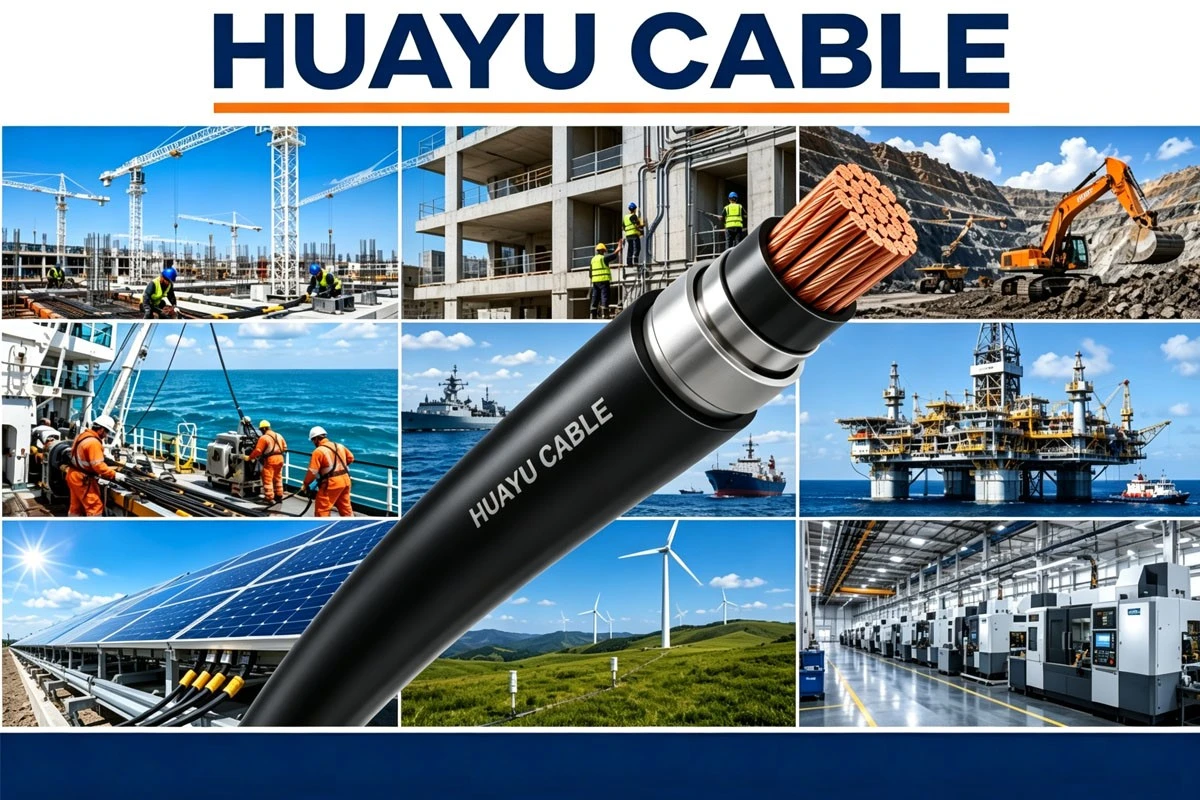
A cable running through a power grid and one installed on a ship, down a mine shaft, or on a rail vehicle are all carrying electricity - but what they're actually up against couldn't be more different. When we plan for application fit, we start with where the cable will sit and what it connects to, rather than defaulting to whatever's generic. Right now that spans power transmission and distribution, industrial manufacturing, marine engineering, mining, rail transit, and renewable energy.
For power and grid systems, the job is mostly transmission and distribution, so selection comes down to rated voltage, conductor material, insulation, installation method, flame retardancy, and the environment it's going into. This is high-volume, fairly standardized work - the steady base of the business, really. Industrial settings are a different story: cables there are more about powering equipment, control, instrumentation, and signal connections, and the concern shifts from "can it carry current" to "is the signal stable, and can it resist interference."
Marine and offshore environments are tougher - cable out there sits in humidity, salt spray, or swinging temperatures for years, and if the insulation degrades or the sheath cracks, the repair and downtime cost usually dwarfs what the cable itself was worth. So long-term stability matters more here than whatever the spec sheet said on day one. Mining is its own set of problems: cable often runs long distances through tight underground spaces, gets dragged and crushed, and cycles on and off reels repeatedly - which pushes the abrasion resistance and flexibility requirements well past what a standard power cable needs to handle.
Rail vehicles and wind power bring their own priorities - limited space, constant flexing, temperature swings, fire safety - while rail signaling systems and industrial automation care more about steady signal transmission and interference resistance. For project customers, knowing where a cable goes, what it connects to, and what electrical and standards requirements it has to meet usually matters more than knowing a product name. That's generally why we ask about the actual application before recommending anything.
OUR HISTORY
Twenty Years in Cable Manufacturing, Starting from Wuwei
We started in June 2004, in Wuwei, Anhui Province. Just a small company back then, only doing wire and cable. From day one we cared about quality more than growing fast, and honestly that decision has never really changed. Cable problems usually show up after the cable is already installed - in a power system, on a ship, wherever - and by that point fixing it costs way more than the cable was ever worth. So quality first was never really a slogan for us. It was just the cheaper way to do business, long term.
Growth took years. Not a fast story. We served customers in China first, then opened an office in Beijing, then one in Shenzhen. Shenzhen handles overseas business mostly. Somewhere in there we also built our own quality management system and got direct import and export rights, which took a while to sort out properly. We'll talk more about certifications and where we export later on this page.
2016 was a good year for us. Huayu became one of China's Top 100 Most Competitive Enterprises in the wire and cable industry, and we've stayed on that list every year since - eight years now. It's not just about production numbers. Management and market performance count too. Eight years in a row is not one lucky year, it's eight years of not messing up.
One production line in 2004. Now we're a group with offices in several cities and business well outside China. A lot has changed - the market, what customers want, the standards we follow. But quality first, the thing we started with, is still what we go back to with every new customer, every new project.
OUR CERTIFICATE
Certifications Aren't Just Logos - They're What Customers Actually Check
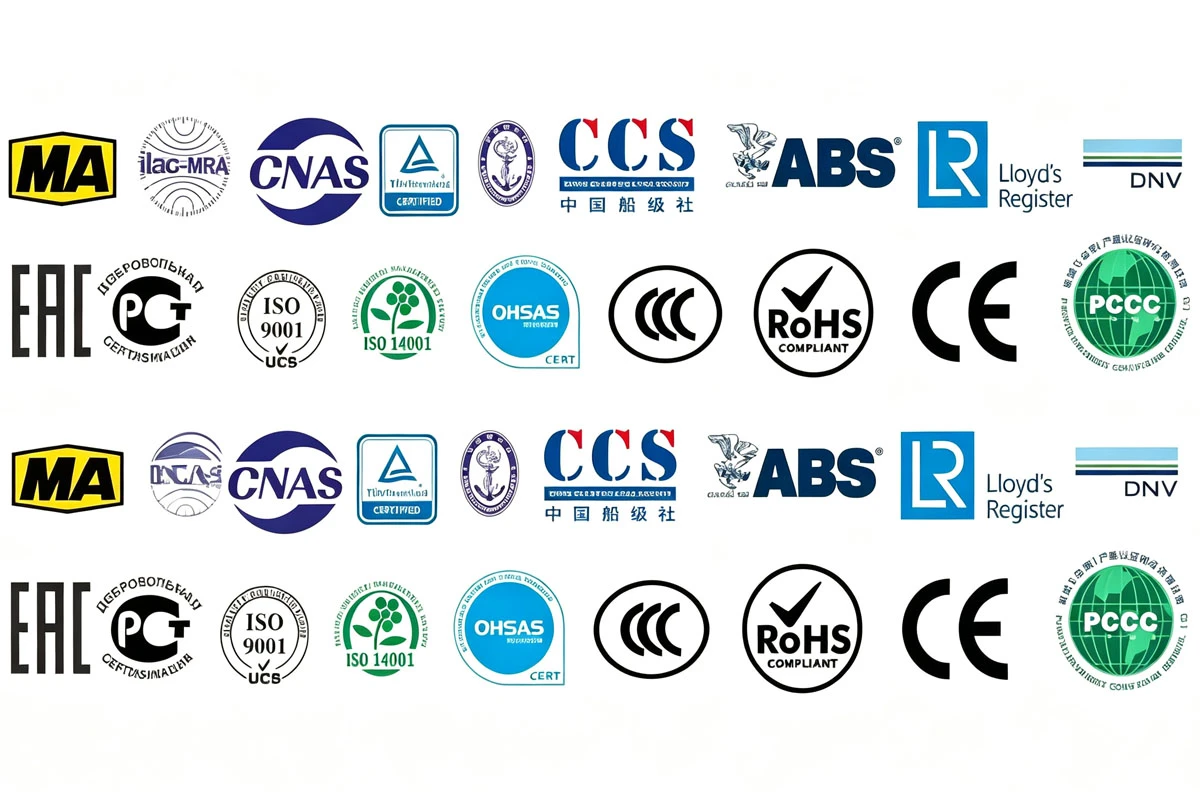
For anyone buying industrial cable, certifications aren't just a row of logos on a website. They're basically the real proof that a manufacturer, or a specific product, can actually be used on a certain market or project. No certification, no bidding, most of the time - doesn't matter how good the cable performs. We currently hold ISO9001:2015, ISO14001:2015, and ISO45001:2018, covering quality, environment, and health and safety management. Honestly this is just the base level stuff that keeps our production consistent day to day.
For marine and offshore application, we've got product certifications from ABS, CCS, DNV, LR, and BV - the main classification Certificate. Shipyards and offshore projects usually need cable to come from an approved supplier list, and without the right certification, it doesn't matter how good your product is, you're not getting on that list. So for this kind of work, classification certification isn't a nice-to-have. It's the door you have to get through first.
For power and general industrial markets, we also have CE, UL, CCC, IEC related standards, TUV, and GOST/EAC. Each one is basically tied to a specific region - CE for the EU, GOST/EAC if you're selling into Russia and nearby countries, that kind of thing. Which certifications actually apply depends on the product and where it's going.
Besides product certifications, we also file for national patents on production methods and cable structures. We currently have 85 authorized patents, including 3 invention patents. Our R&D team ran into while developing special cables - things like how to make a certain structure bend better or hold up against water. That said, certifications and patents are only part of the picture. Design, raw material control, the production process, final testing - all of that matters just as much for whether a cable actually holds up. That's the part we'd want customers to know too, not just the certificate list.
PRODUCTION EQUIPMENT
363 Machines, From Raw Conductor to Finished Cable
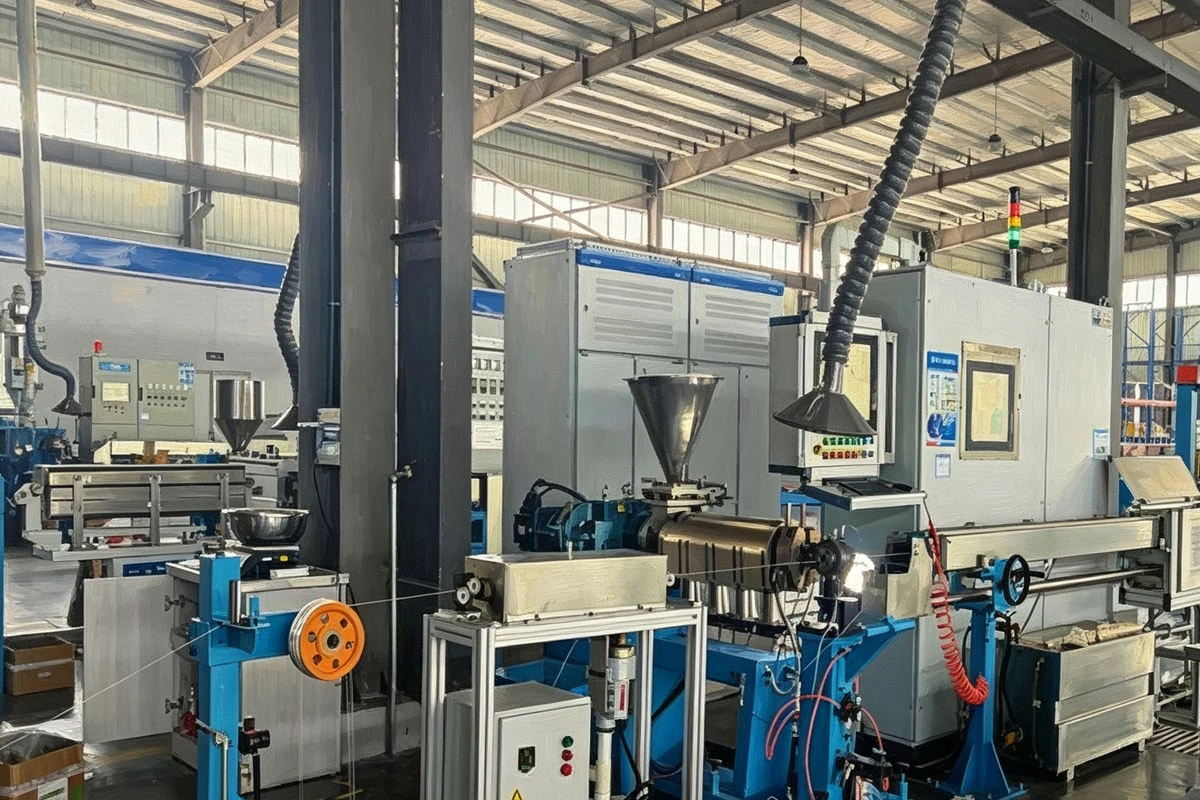
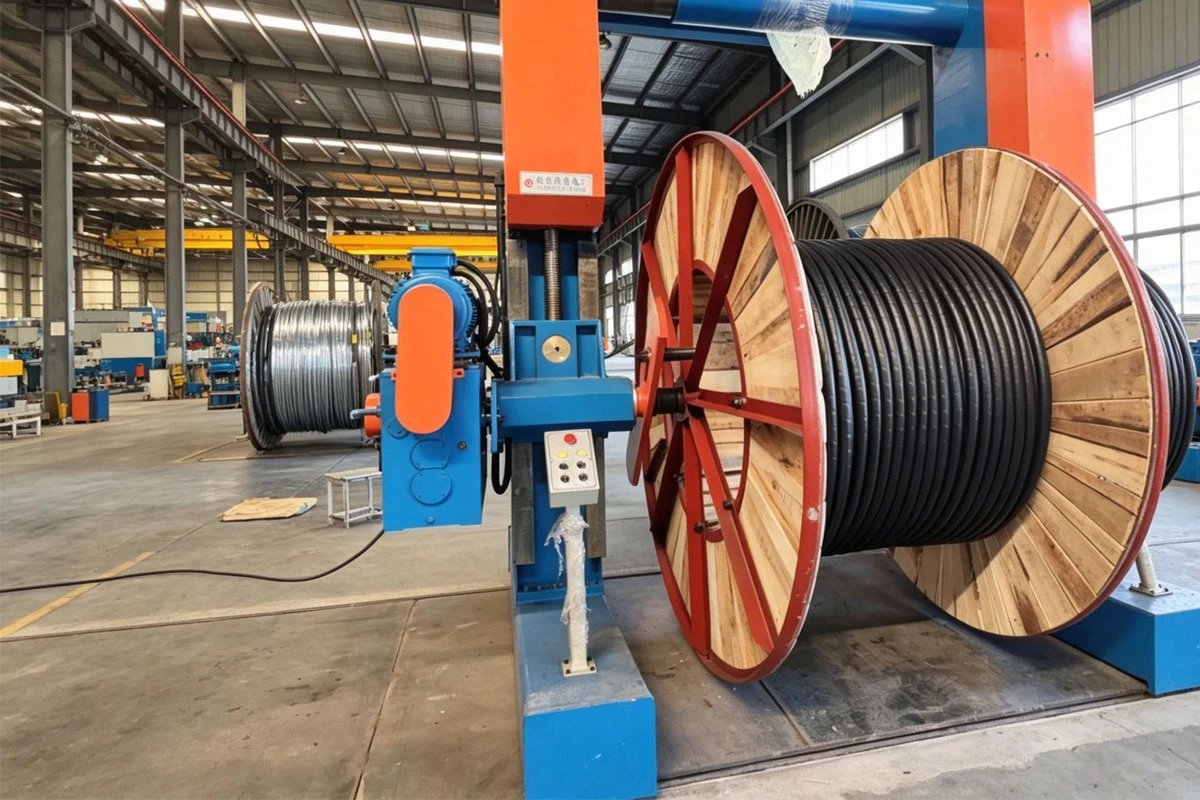
Making a cable takes a lot of steps - conductor processing, stranding, extrusion, cabling, braiding, armoring, testing, all of it. Each step needs its own kind of machine, and if we're missing one, some custom designs just stay on paper. They never actually get made. Right now we have over 363 machines and pieces of equipment, covering everything from raw conductor work to final testing.
For conductor work, we run 21 wire drawing machines and 9 stranding machines. That's the basic step for most of what we make. For insulation and sheathing, we've got CCV and CV cross-linking lines plus several extrusion lines. Honestly a lot of what determines the range of conductor sizes we can offer, or how even the insulation thickness turns out, comes down to how precise these machines actually are.
For more complex cable structures, we also have 43 set extrusion machines, 39 set cabling machines, 27 set stranding machines, 115 set shielding, braiding and armoring machines, 20 set stranding machines, 9 set wire drawing machines, and 33 set other machines (stripping machines, loading and unloading machines, welding machines, inkjet printers, single-beam fixed cranes, etc.), totaling 286 sets. These are for stranding multi-core cable together and adding braided shielding or steel wire armor, depending on what the environment calls for. Whether a factory can take on complicated custom orders or not really comes down to equipment like this - it's kind of the real difference between a regular cable maker and one that can actually do special cable.
For testing, we have partial discharge test equipment, high voltage testers, AC spark testers, aging chambers, fire resistance test equipment, and DC resistance testers. We use these during production and again after the cable is finished, checking things like conductor resistance and insulation performance with real measurements, not just trusting the process settings. Having both production and testing equipment set up this way is part of why we've been able to keep passing international certification audits over the years.
PRODUCTION MARKET
70+ Projects Over 10 Years, Across Many Industries and Regions
Looking back at our project records from 2016 to 2026, we've got over 70 supply projects worth mentioning, covering China plus markets in Asia, the Middle East, Europe, Africa, and South America. These projects application in industry, such as petrochemicals, energy, marine and offshore work, mining, rail, and general manufacturing. It's not built on one industry or one big customer - it's more spread out than that.
China is still a big part of what we do. Our cable goes into petrochemical plants, chemical production, power projects, railway construction, shipbuilding, mining, steel production, and lithium battery material projects, and our customers here are mostly engineering firms, industrial manufacturers, and large project contractors. Petrochemical and chemical work is where we've done the most, honestly - polyethylene plants, synthetic ammonia, coal chemical projects, new material production, that kind of thing. Mostly power cable, control cable, computer cable, and instrumentation products for these.
Marine and offshore is another market we've been in for a long time. Projects cover Chinese shipyards and marine engineering work, and the cable types range across different ship and offshore applications, including cable that meets specialty vessel standards. We've also done marine and offshore projects in Malaysia, Pakistan, and Russia - this side of the business has kept growing, which lines up with all the classification society certifications we've built up over the years.
On the international side, we've worked on a rubber factory project in Thailand, a steel project in Malaysia, an oil and gas instrumentation project in the UAE, mining projects in Serbia and Ghana, power and engineering projects in Pakistan, plus work in Indonesia, Vietnam, Nigeria, and Ecuador. Products across these projects include power cable, control cable, computer cable, mining cable, solar cable, instrumentation cable, and low voltage cable, and customers range from EPC contractors to industrial manufacturers to project owners. Ten years of this kind of work is really what's given us a real sense of how different countries, industries, and project types actually operate - and that's what we draw on when we're figuring out what a new customer actually needs.
OUR SERVICE
From First Inquiry to After Delivery
Buying cable usually isn't as simple as picking a model off a list. Before placing an order, customers need to work out rated voltage, conductor material, insulation, sheathing, standards, certifications, the environment it's going into, quantity, delivery terms - all of it. Our service starts right from the inquiry. Sales gets the basic project info first, and if there's a technical question, our technical team jumps in too, helping match the actual application to what the cable needs to do, before we even get to quoting. Honestly, if a customer doesn't know exactly which model they need yet, telling us about the actual working environment usually gets them further than just asking "do you have X model" - this comes up a lot with marine and mining customers, since those cables really do need to be built around the specific conditions. We also do OEM/ODM work, which we've covered elsewhere. If someone wants to check the product first, we can send samples - new customers cover the shipping, and we refund that once they place a real order.
Once an order's confirmed, our quality team checks raw materials, the production process, and the finished product separately. During production and before shipping, we make sure the specs, quantity, packaging, and delivery schedule all match what was agreed, and we keep the customer updated as things move along. For packaging, depending on the product and how it's being shipped, we can do reels, pallets, wooden drums, or custom packaging. Shipping can go by sea or air, and we can work out the port with the customer based on their logistics setup.
We offer 24-hour support once an order's in motion. If something comes up - a delivery issue, a logistics problem, some technical question - customers can reach our team any time, not just during normal office hours. That matters a lot for overseas customers dealing with big time zone differences, and honestly it's something we've had to build up gradually as our international business grew.
Delivery isn't really the end of it. Cable gets used for a long time, so problems usually show up after it's already in service, not right when it arrives. Our quality feedback channels are open after delivery - whatever a customer raises gets recorded, looked into, and followed up with an actual solution. Whether one order turns into a long-term relationship usually comes down to this part: being straight about what went wrong and actually fixing it. That's been our approach to after-sales for a long time now.